Understanding Gender Identity with Christian Owens
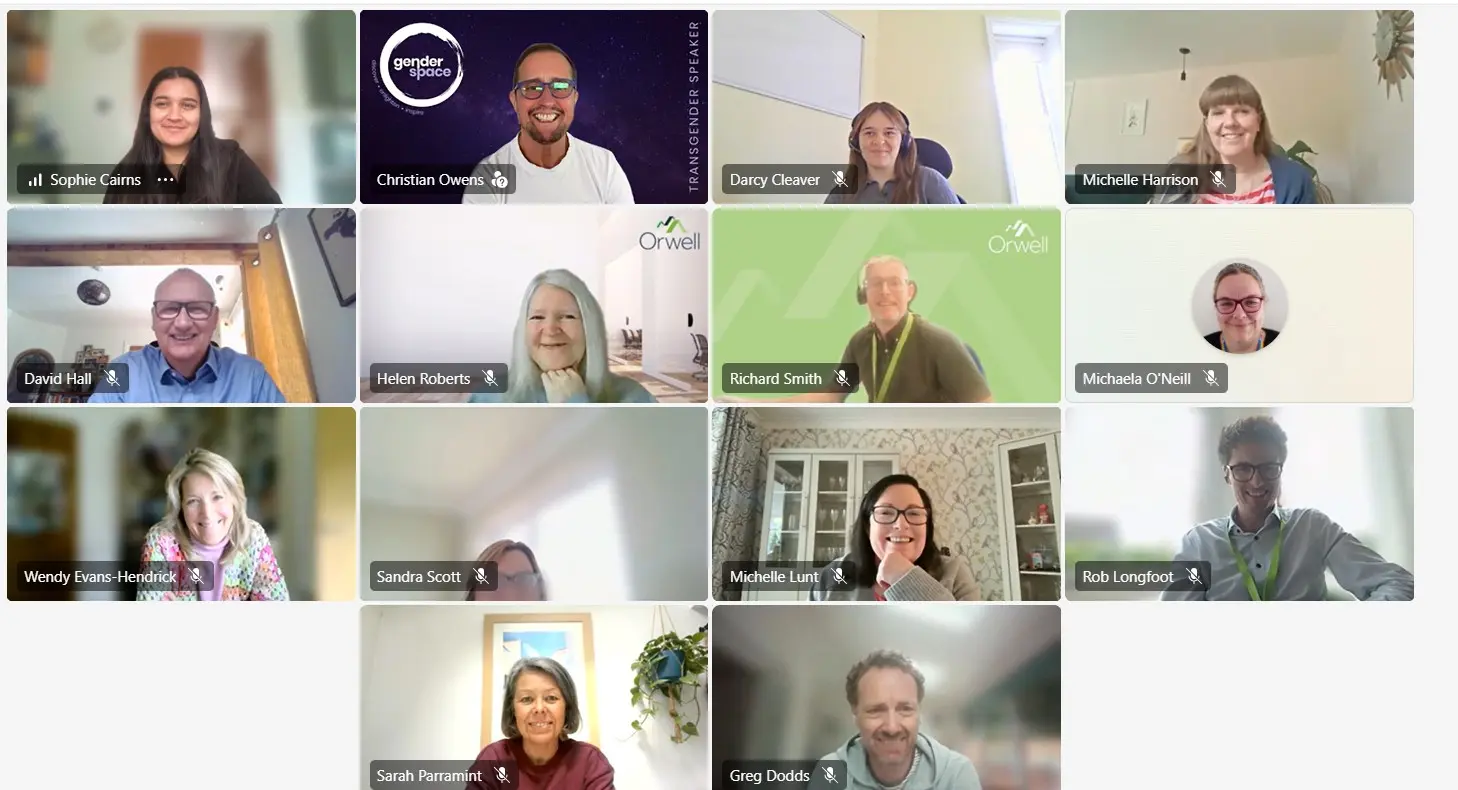
In recognition of Pride Month, we welcomed Christian Ownes, a retired Detective Sergeant and founder of GenderSpaceUK to our latest Knowledge Café, where he delivered an insightful talk on Gender Identity in the Workplace and sharing his own personal journey of gender transition.
The session was designed to raise awareness, educate, inspire and create meaningful conversations around inclusion, equality and allyship. Drawing on his lived experience as a transgender man, Christian provided a powerful insight into the realities of being transgender, sharing both the challenges and the moments of joy.
What Does It Mean to Be Transgender?
At its core, transgender (or trans) refers to someone whose gender identity does not align with the sex they were assigned at birth. It’s important to understand that being transgender is about a person’s identity, not about how they look, what medical steps they have or haven’t taken or how others perceive them.
Fears, concerns and expectations
Often, when someone discloses that they are transgender, people naturally worry about saying the wrong thing or causing offence. You may find yourself asking questions such as:
- How do I communicate respectfully?
- How do I address someone and respect pronouns?
- Is everyone’s journey the same?
- How much can I ask?
- How do I support someone through transition?
To open the session, Christian addressed some of the common questions people often ask themselves when they meet someone who is transitioning. Addressing these questions early on, helps relieve uncertainty and create a more open, comfortable space for discussion.
Visibility and Identity
Christian highlighted the importance of visibility within the LGBTQ+ community and the role each of us plays in creating an inclusive environment where all identities are respected. He emphasised the value of acknowledging and validating a person’s identity, being comfortable asking questions, and reflecting on our own mistakes and their impact. Christian also encouraged practical steps such as using pronouns in conversations, updating email signatures, badges, and team profiles on the website to help normalise inclusive practices and foster a more welcoming workplace for everyone.
Becoming Who You Want to Be
Christian shared that he experienced gender dysphoria from a very young age, a feeling of discomfort that arises when someone’s gender identity does not match their physical body or assigned gender at birth. He explained that he always knew something was different, describing it as, “I’ve been born without a body part.”
Christian spoke about the people who supported him throughout his transition, both personally and professionally. During his 27‑year career in the police service, he highlighted one key figure who made a profound difference: his Chief Constable.
When Christian opened up to him about his transition and the medical journey ahead, the Chief Constable demonstrated what true leadership looks like. He admitted openly that he knew very little about the process Christian was about to undertake and wasn’t afraid to acknowledge his limited understanding. By doing so, he created space for Christian to educate him, building trust and fostering a supportive environment that allowed Christian to feel seen, respected, and understood.
Being a Supportive Ally
If you want to support someone who is transgender or may be going through transition, there are a few simple but impactful ways in which you can make a difference:
- Be informed and educate about Trans Lives.
- Use correct pronouns and gender inclusive language.
- Reflect and be aware of mistakes.
- Create safe and supportive conversations.
- Increase visible representation.
- Listen and uplift trans and nonbinary voices.
- Encourage lived experiences in policy and practises.
- Create an inclusive culture through kindness, support and respect.
Christian closed the session with a quote that motivates his work: “Your legacy is every life you’ve ever touched”, a quote from Maya Angelou. It’s a fitting reminder that even small acts of support and understanding can create a ripple effect of positive change.
At Orwell, we’re committed to giving people the opportunity to share their experiences so we can continue raising awareness among our colleagues and the communities we serve.
For more information about our commitment to equality, diversity, and inclusion, please visit: Equality, Diversity and Inclusion at Orwell | Orwell Housing
 Together we can end domestic abuse